 Image 1 of 4
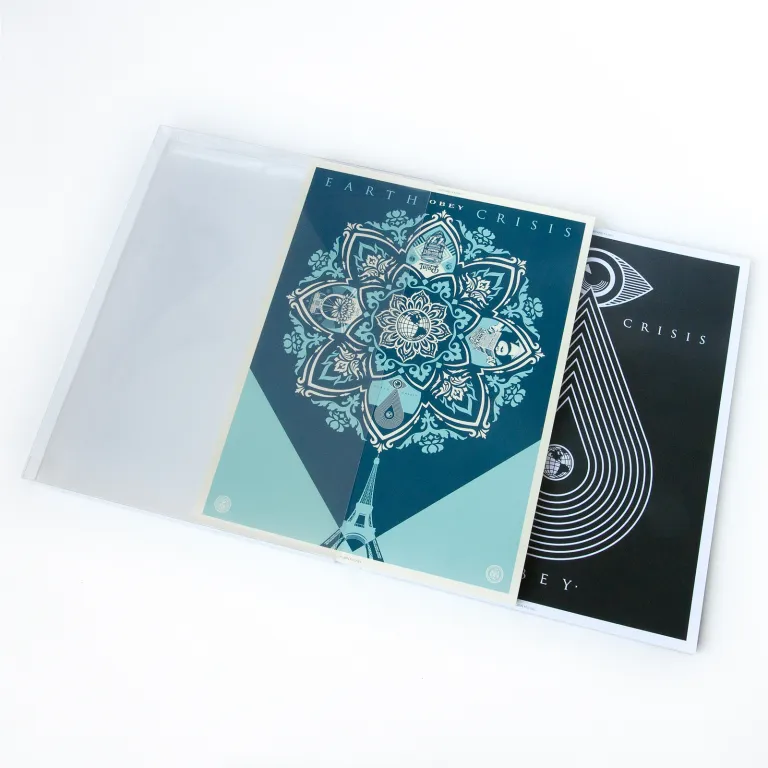 Image 2 of 4
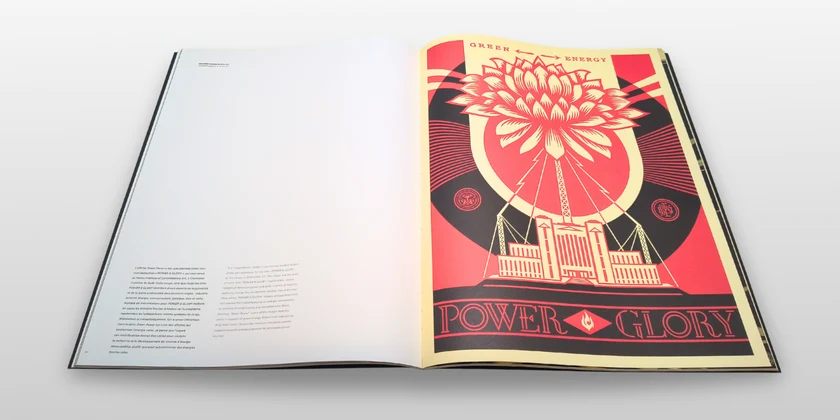 Image 3 of 4
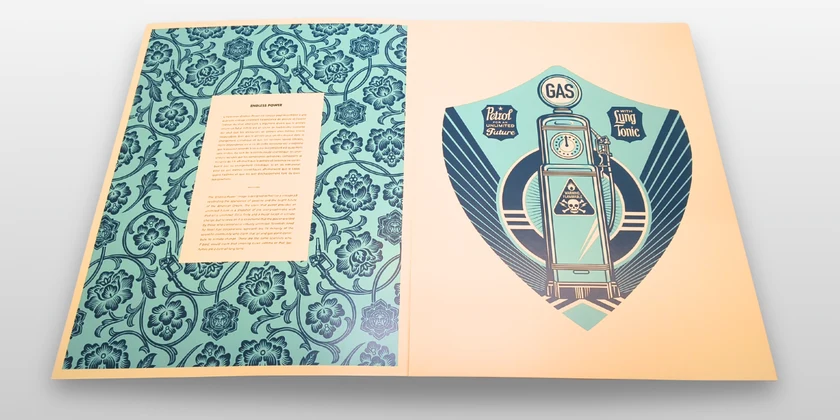 Image 4 of 4
A globe eight metres across and heavier than two cars, suspended inside the most photographed structure on earth. The first piece of street art ever mounted on it. This is the book that came out of it.
In November 2015 Shepard Fairey hung a globe between the first and second floors of the Eiffel Tower. Eight metres in diameter, 2.3 tonnes, sixty metres off the ground on cables, covered in a mandala of floral geometry with the tower’s own silhouette worked into the pattern. Galerie Itinerrance commissioned it. Nothing like it had ever been allowed on the structure before.
The timing is the part that stays with me. The globe went up on 20 November and stayed until 11 December, which meant it was hanging there through the whole of the COP21 climate conference. One week before it went up, on 13 November, Paris had been attacked and 130 people were killed. The city was still counting its dead. The conference went ahead anyway, and a planet made of paper and paste hung inside the Eiffel Tower while it did.
Fairey isn’t a subtle artist and has never pretended otherwise. He started in 1989 at Rhode Island School of Design with a sticker of Andre the Giant’s face and the wrestler’s billed height and weight underneath it, an in joke about propaganda that got out of hand and never came back. The word OBEY arrived seven years later, in 1996, when the estate stopped him using the name. He spent twenty years putting the same graphic language on walls, in a red, black and cream palette lifted straight from Soviet and WPA poster design, and in 2008 he made the Obama “Hope” poster, which ended up in the Smithsonian’s National Portrait Gallery and in more or less everybody’s memory of that year.
He borrowed the visual grammar of propaganda and pointed it at things worth being propagandised about.
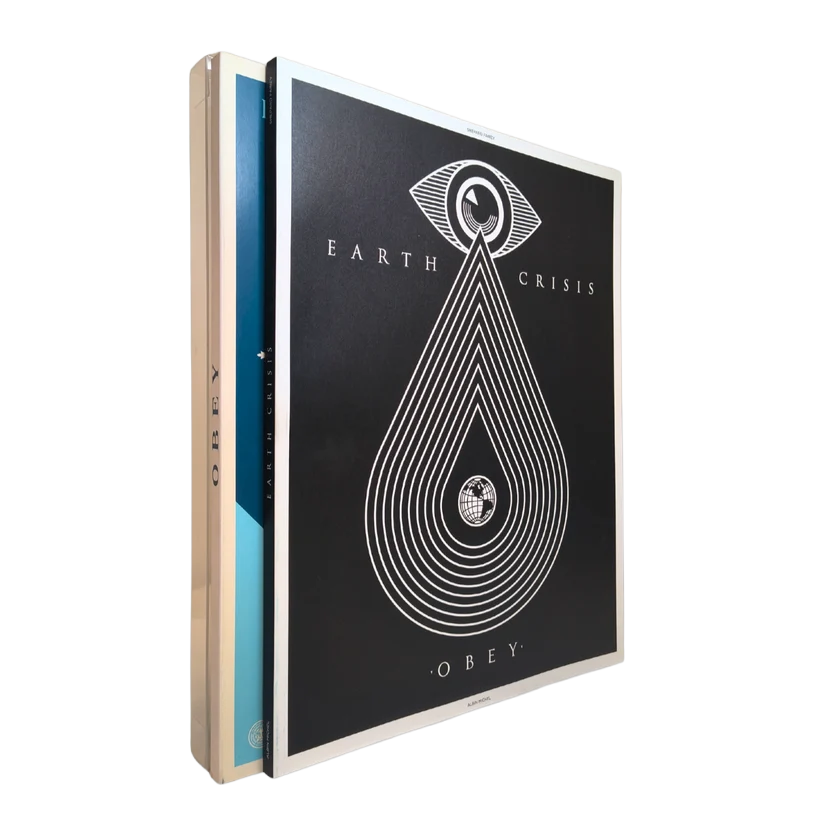
Obey: Earth Crisis is the record of the environmental half of that work. Published in 2016 by Editions Albin Michel with Galerie Itinerrance, bilingual French and English, two oversized volumes in a slipcase at roughly 44 by 34 centimetres. The first volume gathers twenty five years of ecological work: posters, murals, prints, studies, and the road to the globe itself. The second isn’t really a book at all. It’s a board bound set of ten prints, made to be broken out and framed if you’d rather live with them than shelve them. Proceeds went to France Nature Environnement, a federation of more than three and a half thousand environmental groups.
That last detail tells you what the object is. Fairey has spent his career being accused of having it both ways, of selling rebellion at a markup, and he has generally answered by making the work do something. A book about the climate that funds climate groups is not a complicated argument. It’s just the argument, made in the only way a printed object can make it.
Then there’s the signature, which changes the thing entirely. A signed copy isn’t a nicer copy. It’s a copy the artist held. There is a version of this set on a shelf in a house somewhere that will outlive everybody currently reading this, and the mark on the title page is the one moment the maker and the object were in the same room.
Big books get bought and not opened. Open this one. The prints in volume two were made to come out. Two-volume hardcover set in a slipcase, roughly 44 x 34 cm.
A globe eight metres across and heavier than two cars, suspended inside the most photographed structure on earth. The first piece of street art ever mounted on it. This is the book that came out of it.
In November 2015 Shepard Fairey hung a globe between the first and second floors of the Eiffel Tower. Eight metres in diameter, 2.3 tonnes, sixty metres off the ground on cables, covered in a mandala of floral geometry with the tower’s own silhouette worked into the pattern. Galerie Itinerrance commissioned it. Nothing like it had ever been allowed on the structure before.
The timing is the part that stays with me. The globe went up on 20 November and stayed until 11 December, which meant it was hanging there through the whole of the COP21 climate conference. One week before it went up, on 13 November, Paris had been attacked and 130 people were killed. The city was still counting its dead. The conference went ahead anyway, and a planet made of paper and paste hung inside the Eiffel Tower while it did.
Fairey isn’t a subtle artist and has never pretended otherwise. He started in 1989 at Rhode Island School of Design with a sticker of Andre the Giant’s face and the wrestler’s billed height and weight underneath it, an in joke about propaganda that got out of hand and never came back. The word OBEY arrived seven years later, in 1996, when the estate stopped him using the name. He spent twenty years putting the same graphic language on walls, in a red, black and cream palette lifted straight from Soviet and WPA poster design, and in 2008 he made the Obama “Hope” poster, which ended up in the Smithsonian’s National Portrait Gallery and in more or less everybody’s memory of that year.
He borrowed the visual grammar of propaganda and pointed it at things worth being propagandised about.
Obey: Earth Crisis is the record of the environmental half of that work. Published in 2016 by Editions Albin Michel with Galerie Itinerrance, bilingual French and English, two oversized volumes in a slipcase at roughly 44 by 34 centimetres. The first volume gathers twenty five years of ecological work: posters, murals, prints, studies, and the road to the globe itself. The second isn’t really a book at all. It’s a board bound set of ten prints, made to be broken out and framed if you’d rather live with them than shelve them. Proceeds went to France Nature Environnement, a federation of more than three and a half thousand environmental groups.
That last detail tells you what the object is. Fairey has spent his career being accused of having it both ways, of selling rebellion at a markup, and he has generally answered by making the work do something. A book about the climate that funds climate groups is not a complicated argument. It’s just the argument, made in the only way a printed object can make it.
Then there’s the signature, which changes the thing entirely. A signed copy isn’t a nicer copy. It’s a copy the artist held. There is a version of this set on a shelf in a house somewhere that will outlive everybody currently reading this, and the mark on the title page is the one moment the maker and the object were in the same room.
Big books get bought and not opened. Open this one. The prints in volume two were made to come out. Two-volume hardcover set in a slipcase, roughly 44 x 34 cm.