 Image 1 of 3
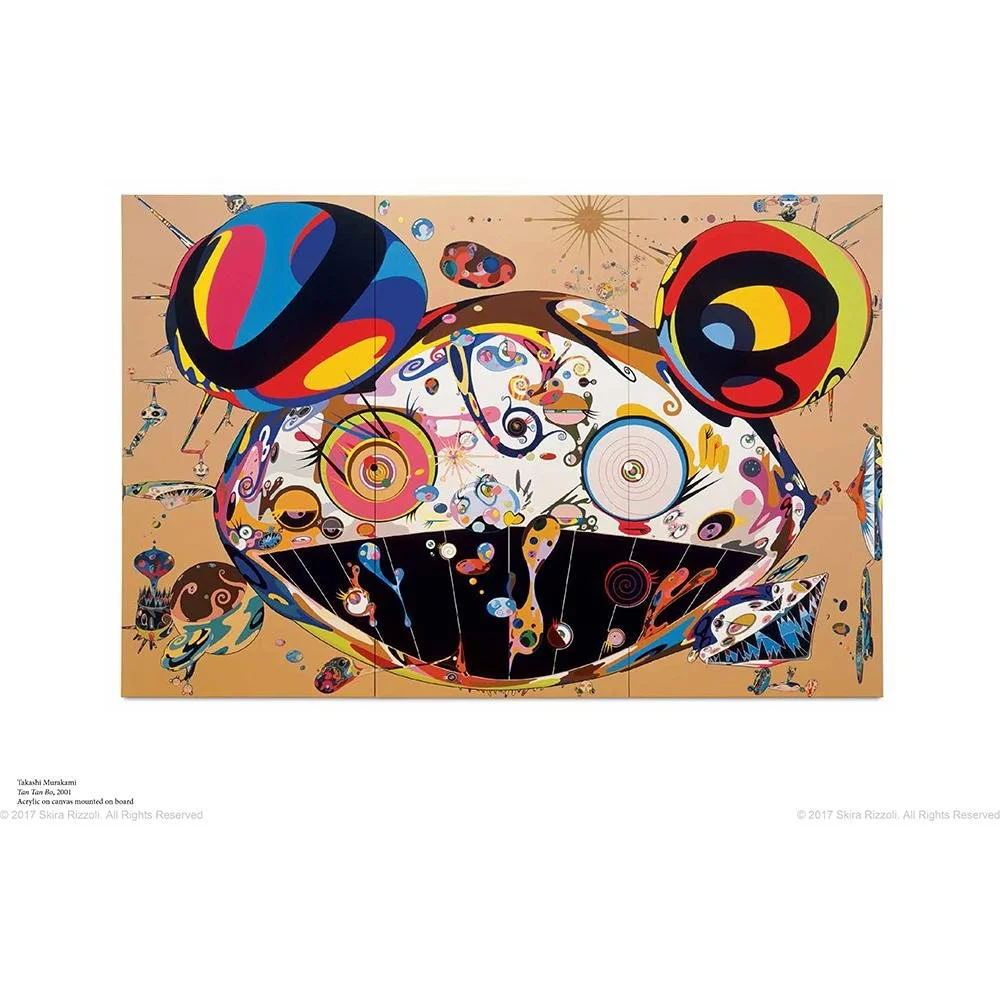 Image 2 of 3
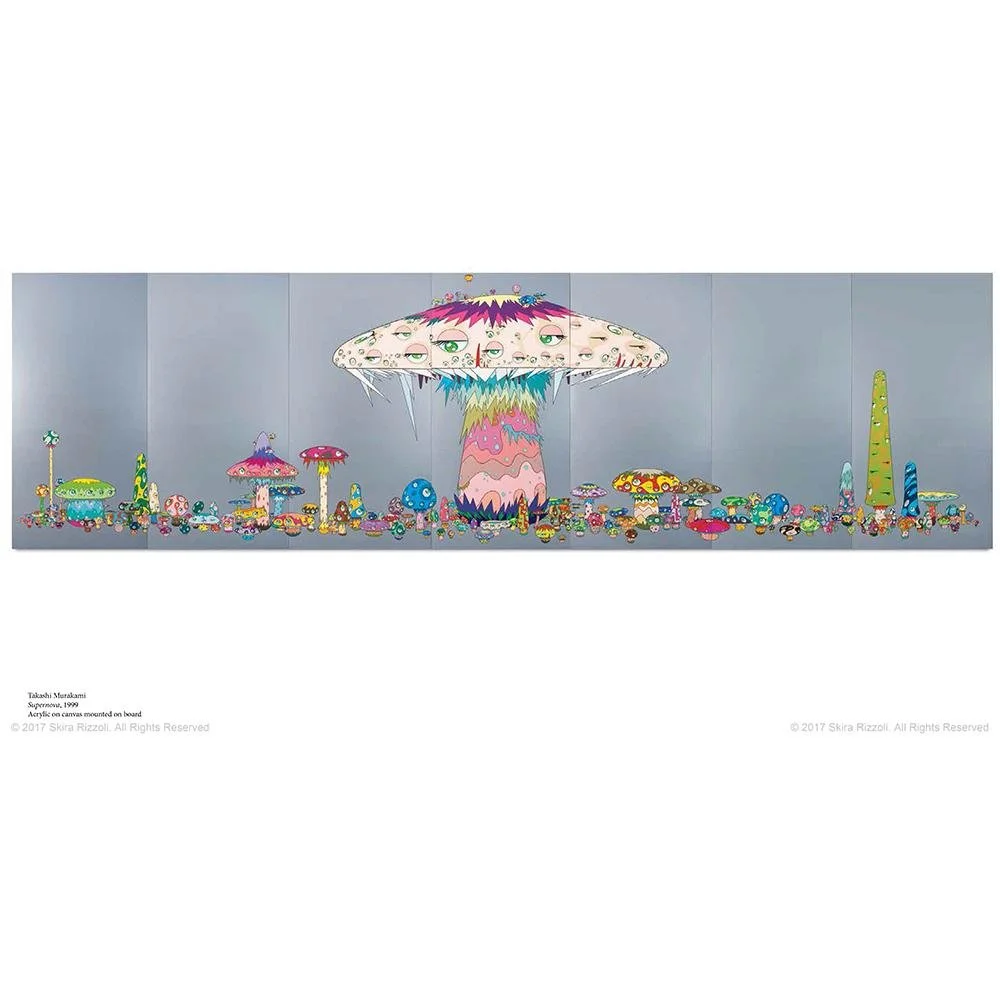 Image 3 of 3
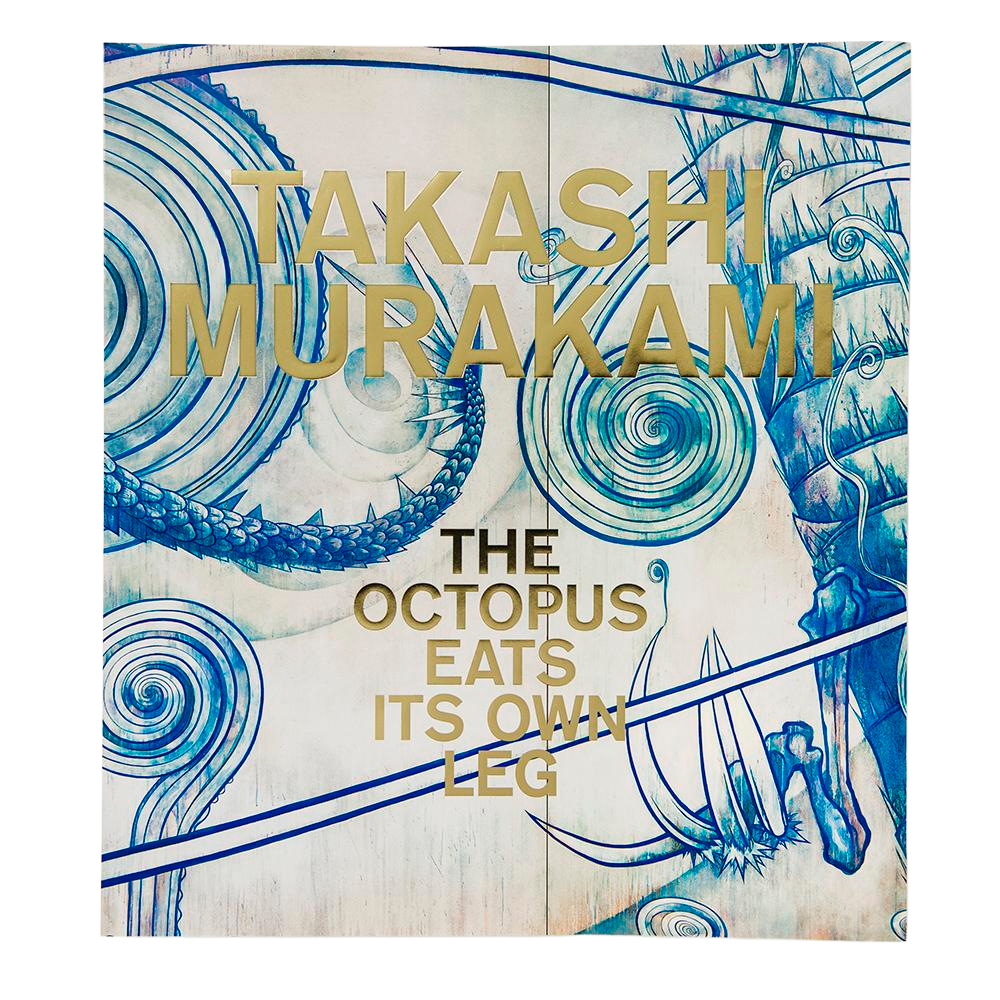
There’s an old Japanese line about an octopus that gnaws off its own leg when it’s trapped and starving. It survives. The leg grows back. Murakami named his career survey after it.
Start with the title, because Murakami did.
The octopus in the saying is desperate. It’s cornered, so it consumes part of itself to stay alive, and the limb regenerates, and it does this again the next time it’s cornered. Murakami chose that as the name for the biggest survey of his paintings ever mounted in North America, and he meant it about himself. Thirty years of feeding on his own back catalogue. Cannibalising earlier motifs, reissuing them, mutating them, selling them, and calling that the work rather than an embarrassment to be hidden.
The show opened at the Museum of Contemporary Art Chicago in the summer of 2017 and ran into the autumn. Michael Darling curated it. This book is what it left behind: 286 pages, around 250 colour plates, published by Skira Rizzoli with the MCA and Kaikai Kiki, essays by Darling alongside Michael Dylan Foster, Chelsea Foxwell, Reuben Keehan and Akira Mizuta Lippit, plus Murakami’s own writing translated out of the Japanese. The show then travelled, to the Vancouver Art Gallery in the spring of 2018 and on to the Modern Art Museum of Fort Worth that summer.
Here’s the part people miss about him. Murakami holds a doctorate in Nihonga, the classical Japanese painting tradition, from what’s now Tokyo University of the Arts. He spent years learning to grind pigment and handle a brush inside a discipline that had gone quiet, and he came out the other side convinced the tradition was being kept alive as a museum piece rather than a living thing. So he left it. And then he spent the rest of his life smuggling its logic back in through the side door.
Superflat wasn’t a style. It was an accusation, and he built a career out of proving it.
That’s what Superflat means, and it’s a harder idea than the flowers let on. Japanese art had always compressed space, no vanishing point, no Western perspective, everything pushed up against the picture plane. Murakami’s argument was that postwar Japanese consumer culture was flat in exactly the same way, and that the flatness went deeper than picture-making. Anime, otaku fandom, kawaii, the whole cheerful machine, built on top of a country that had been firebombed and occupied and then told to be adorable about it. The smiling flowers have a lot of teeth if you look.
Then he did the thing that made the art world furious. He took it commercial, on purpose, at scale. Kaikai Kiki became a production company in 2001 with staff and studios in Tokyo and Brooklyn. In 2003 he and Marc Jacobs put the Monogram through a colour spectrum for Louis Vuitton and it sold out globally. In 2007 he made the cover for Kanye West’s Graduation and animated the video for “Good Morning.”
That last one matters more than the art press wanted to admit. An entire generation met Murakami on an album cover. Not in a gallery, not in a catalogue, not through a curator. They met him in a record shop or on a screen, and it was free, and it worked on them anyway.
Which is what the book is actually for. It’s the version of him assembled by people who take him seriously as a painter, sitting next to the version everybody already knows from the merch. A survey catalogue is the rare object that holds both without apologising for either.
I like books that argue with themselves. This one does it on every spread. Hardcover, 11.5 x 10.3 inches.
There’s an old Japanese line about an octopus that gnaws off its own leg when it’s trapped and starving. It survives. The leg grows back. Murakami named his career survey after it.
Start with the title, because Murakami did.
The octopus in the saying is desperate. It’s cornered, so it consumes part of itself to stay alive, and the limb regenerates, and it does this again the next time it’s cornered. Murakami chose that as the name for the biggest survey of his paintings ever mounted in North America, and he meant it about himself. Thirty years of feeding on his own back catalogue. Cannibalising earlier motifs, reissuing them, mutating them, selling them, and calling that the work rather than an embarrassment to be hidden.
The show opened at the Museum of Contemporary Art Chicago in the summer of 2017 and ran into the autumn. Michael Darling curated it. This book is what it left behind: 286 pages, around 250 colour plates, published by Skira Rizzoli with the MCA and Kaikai Kiki, essays by Darling alongside Michael Dylan Foster, Chelsea Foxwell, Reuben Keehan and Akira Mizuta Lippit, plus Murakami’s own writing translated out of the Japanese. The show then travelled, to the Vancouver Art Gallery in the spring of 2018 and on to the Modern Art Museum of Fort Worth that summer.
Here’s the part people miss about him. Murakami holds a doctorate in Nihonga, the classical Japanese painting tradition, from what’s now Tokyo University of the Arts. He spent years learning to grind pigment and handle a brush inside a discipline that had gone quiet, and he came out the other side convinced the tradition was being kept alive as a museum piece rather than a living thing. So he left it. And then he spent the rest of his life smuggling its logic back in through the side door.
Superflat wasn’t a style. It was an accusation, and he built a career out of proving it.
That’s what Superflat means, and it’s a harder idea than the flowers let on. Japanese art had always compressed space, no vanishing point, no Western perspective, everything pushed up against the picture plane. Murakami’s argument was that postwar Japanese consumer culture was flat in exactly the same way, and that the flatness went deeper than picture-making. Anime, otaku fandom, kawaii, the whole cheerful machine, built on top of a country that had been firebombed and occupied and then told to be adorable about it. The smiling flowers have a lot of teeth if you look.
Then he did the thing that made the art world furious. He took it commercial, on purpose, at scale. Kaikai Kiki became a production company in 2001 with staff and studios in Tokyo and Brooklyn. In 2003 he and Marc Jacobs put the Monogram through a colour spectrum for Louis Vuitton and it sold out globally. In 2007 he made the cover for Kanye West’s Graduation and animated the video for “Good Morning.”
That last one matters more than the art press wanted to admit. An entire generation met Murakami on an album cover. Not in a gallery, not in a catalogue, not through a curator. They met him in a record shop or on a screen, and it was free, and it worked on them anyway.
Which is what the book is actually for. It’s the version of him assembled by people who take him seriously as a painter, sitting next to the version everybody already knows from the merch. A survey catalogue is the rare object that holds both without apologising for either.
I like books that argue with themselves. This one does it on every spread. Hardcover, 11.5 x 10.3 inches.